

Civil rights
Surface patterns that may indicate disparate impacts or unequal treatment.
Better questions. Earlier signals. More accountable institutions.
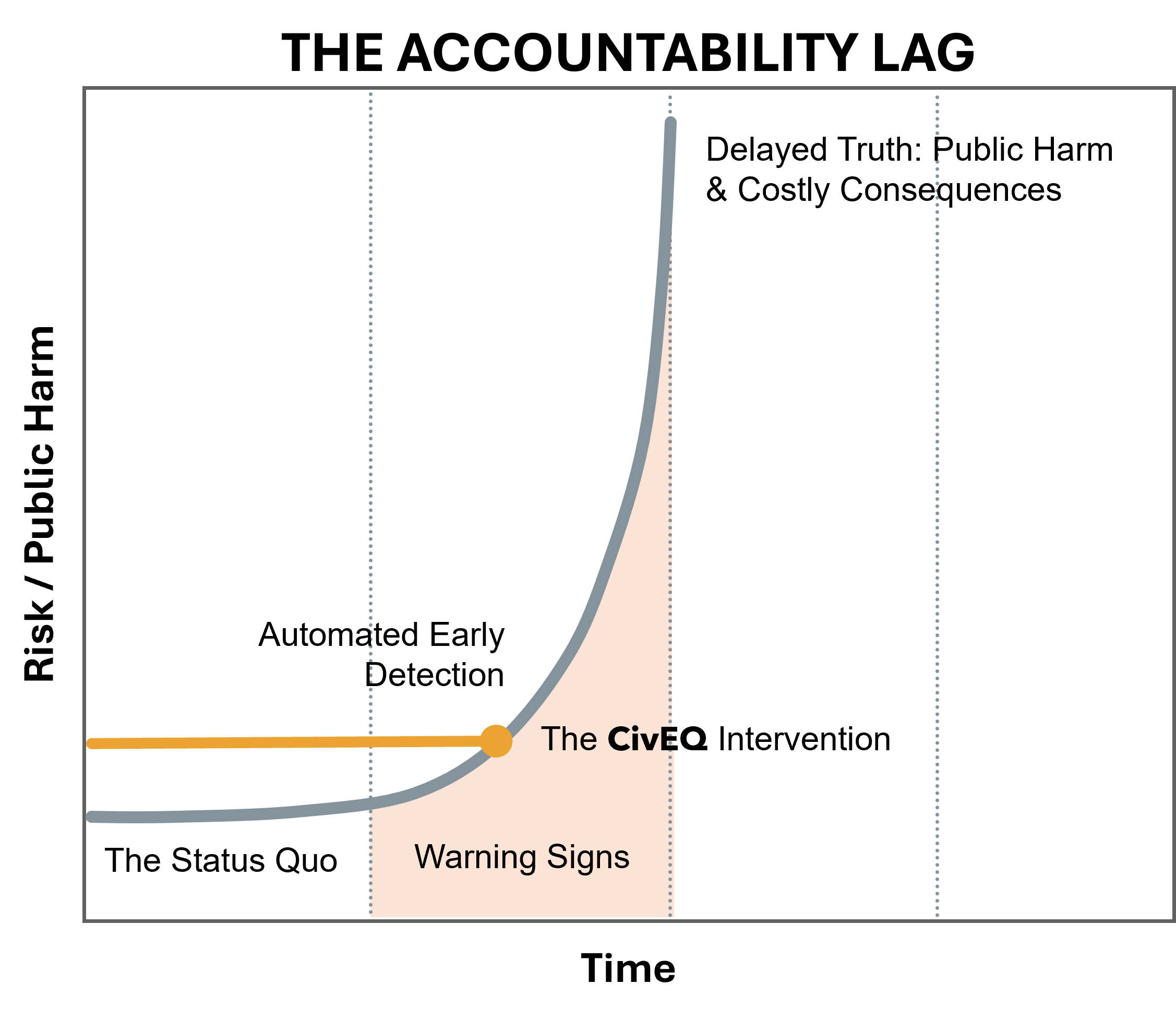
Warning signs can emerge long before an institutional problem becomes a public crisis. Yet the evidence may be scattered across reports, administrative records and disconnected systems, making patterns difficult to recognize early.
As delays accumulate, opportunities for intervention narrow while the potential for public harm, loss of trust and costly consequences grows. The challenge is not simply collecting more information—it is connecting signals soon enough for meaningful oversight.
CivEQ’s proposed intervention: bring those signals together, identify statistical patterns of concern and alert responsible reviewers while there is still time to investigate and respond. Automated detection would support, rather than replace, human judgment.
Policy, governance and the human element work as one system: transparency drives compliance, compliance protects equality, and equality supports accountability. A breakdown in one can be an early warning for all.
Surface patterns that may indicate disparate impacts or unequal treatment.

Make institutional activity easier to monitor and evaluate.

Support oversight of statutory duties, procedures and compliance.

Help connect evidence, equity and accountability across systems.
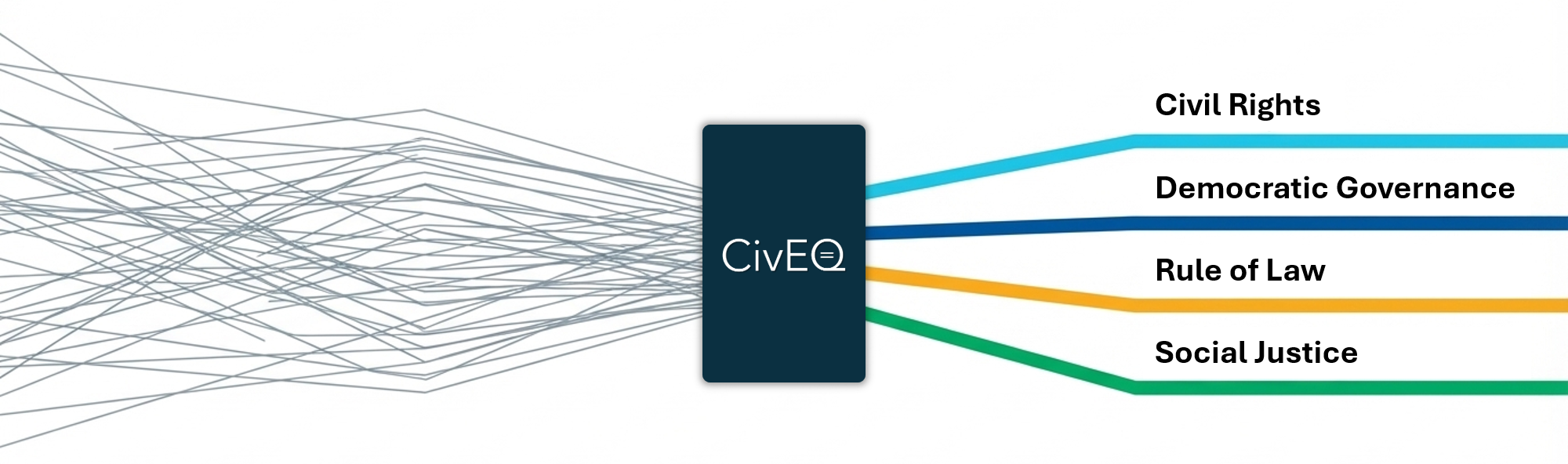
CivEQ is designed to bring together information that is often scattered across public records, institutional reporting and governance systems. By examining these signals together, its AI-assisted approach aims to reveal emerging patterns of unequal treatment, compliance concerns and institutional risk that may be difficult to spot in isolation.
Rather than waiting for a problem to become a public crisis, CivEQ would translate those patterns into clear risk indicators and timely alerts. People responsible for oversight could then examine the supporting evidence, investigate concerns and decide whether action is warranted. The goal is to make accountability more proactive while keeping decisions in human hands.
Unify fragmented information across systems for a more holistic view of governance and civic equality.
Look for statistical unfairness patterns, civil rights risks and deviations from fiduciary responsibility.
Surface proactive alerts so responsible people can investigate and respond before problems escalate.
The CivEQ product concept brings indices, alerts, risk heat maps and trends into a unified overview. The desktop experience is designed for deeper oversight and investigation; the mobile concept keeps key signals and alerts accessible on the move. These are illustrative interface concepts, not screenshots of a deployed service. Scores and alerts shown in the mockups are examples.
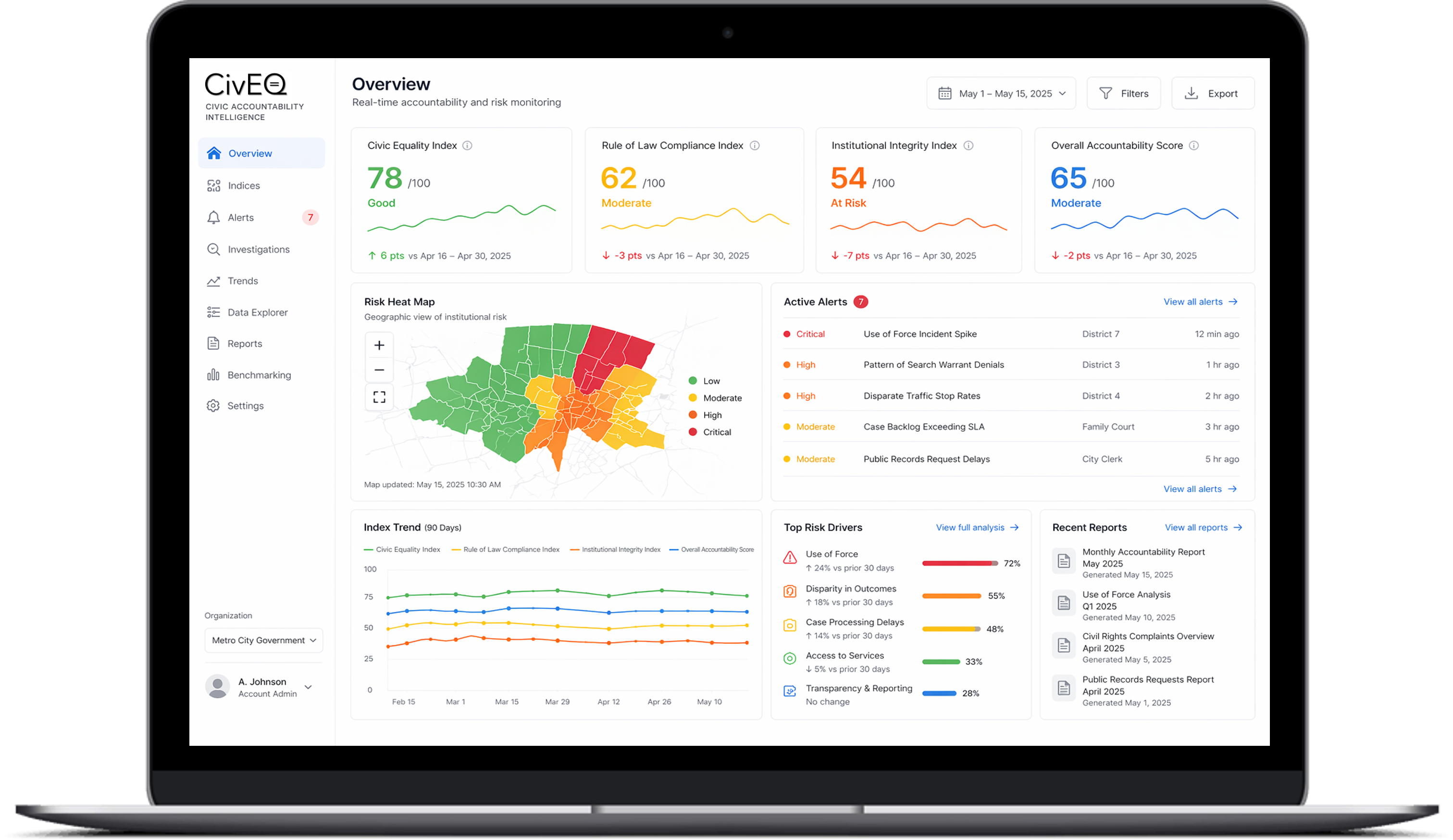
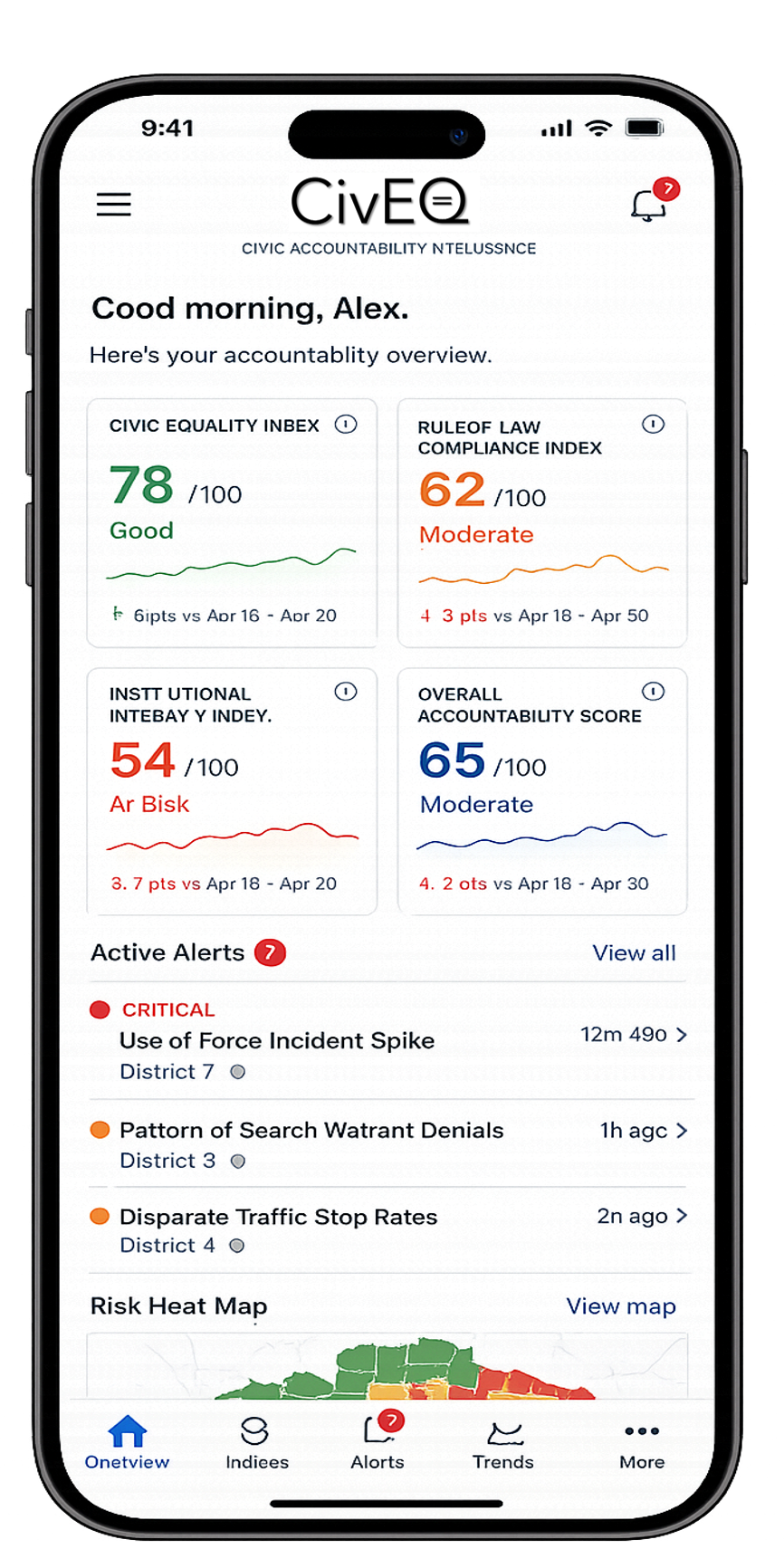
CivEQ is presented here as an entrepreneurial concept. Described features and capabilities reflect the project vision rather than verified production deployments.
CivEQ is envisioned as a way to connect scattered accountability signals, help people assess emerging risks, and support timely, evidence-informed oversight.
Spot potential issues before they escalate into costly disputes or crises.
Support more timely reviews with AI-assisted analysis and human judgment.
Bring fragmented information into a more coherent view of accountability.
Help decision-makers recognize patterns and prioritize informed follow-up.
The proposed architecture emphasizes privacy-aware processing, read-only data connections, bias auditing and expert review. CivEQ is intended to support accountability decisions, not replace human judgment with automated enforcement.
Building technology to measure fairness, improve transparency and strengthen accountability to the people.
Discuss CivEQ ↗